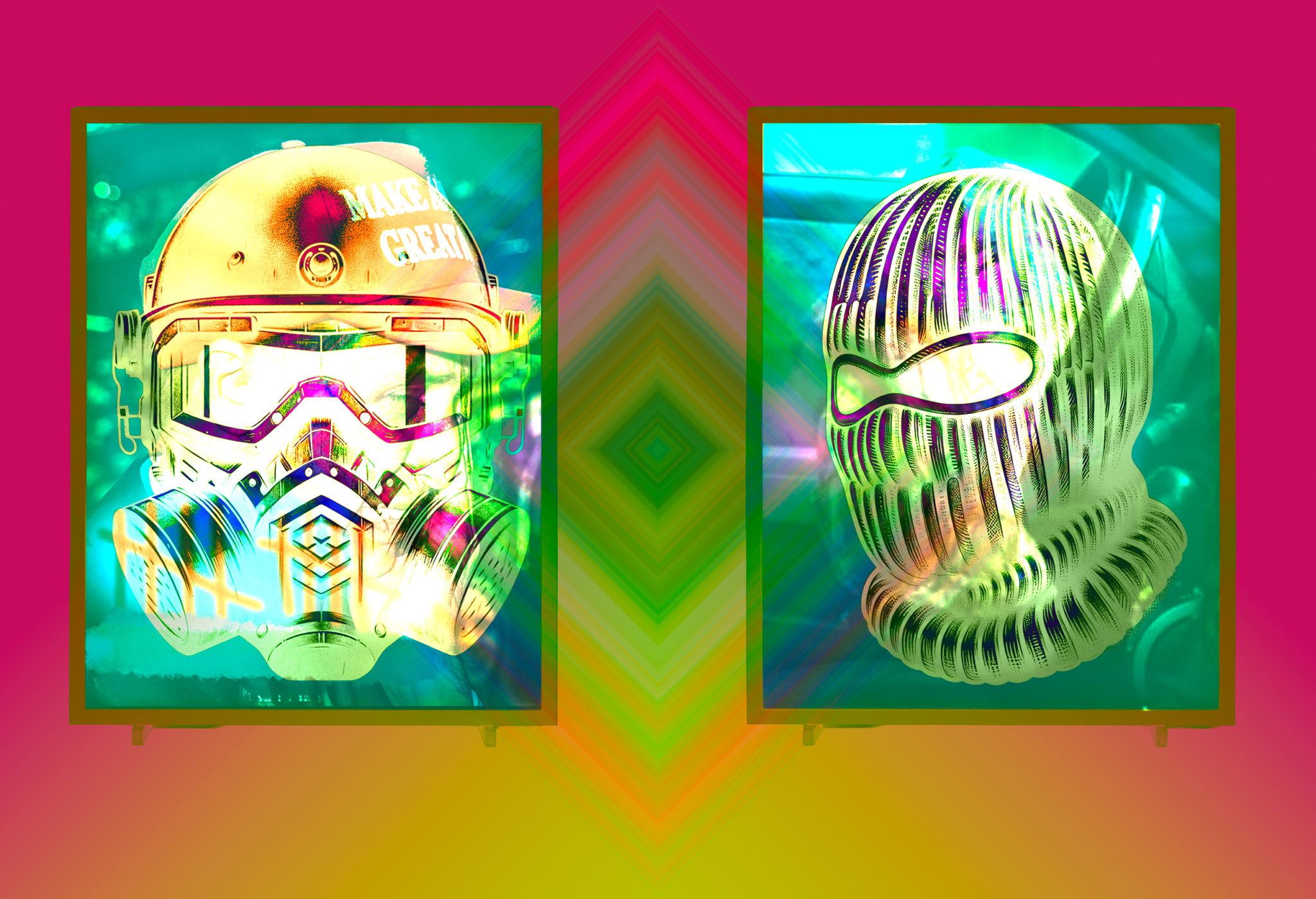

Collage, digital color print, 13 x 19 Inches

I met Leon Golub and Nancy Spero in 1992, not long after I moved to New York, when they came to SVA to give a talk. The Cold War had “ended,” Reagan and Bush still hung in the air like bad weather, and the country was busy congratulating itself for surviving a century it had helped brutalize. Golub and Spero felt like the opposite of that victory parade—clear-eyed, unsentimental, morally awake.
Golub showed paintings that didn’t flinch: mercenaries, torture, power stripped of its language and left as raw violence. No allegory, no safe distance—just the machinery of domination, exposed. Nancy, luminous and ferocious, spoke with warmth and humor, her work already part of the living political bloodstream of the city—one the crumbing walls of the LGBTQ Center, where I’d attended my first ACT UP meeting, the street, and the body as a site of resistance and pleasure.
In the dark room on 21st Street, a student nervously asked if they had advice for young artists. Golub barked, “Don’t do it, kids!” The room laughed. Nancy told him not to say that. He grinned. The joke landed because it wasn’t a joke. Being an artist wasn’t framed as a career—it was framed as a necessity, a form of refusal, a way of staying sane in a mad world. Not ambition. Not success. Survival. Witness. Defiance.
It stayed with me. The sense that art isn’t about belonging to culture, but standing against its lies. That if you’re doing it honestly, it will cost you comfort—but save you from something worse.